
AI Leadership Interviews · Art and creativity
Art Is Just Another Language
Victor VarnadoComedian, cartoonist, filmmaker and founder, Magic Bookifier
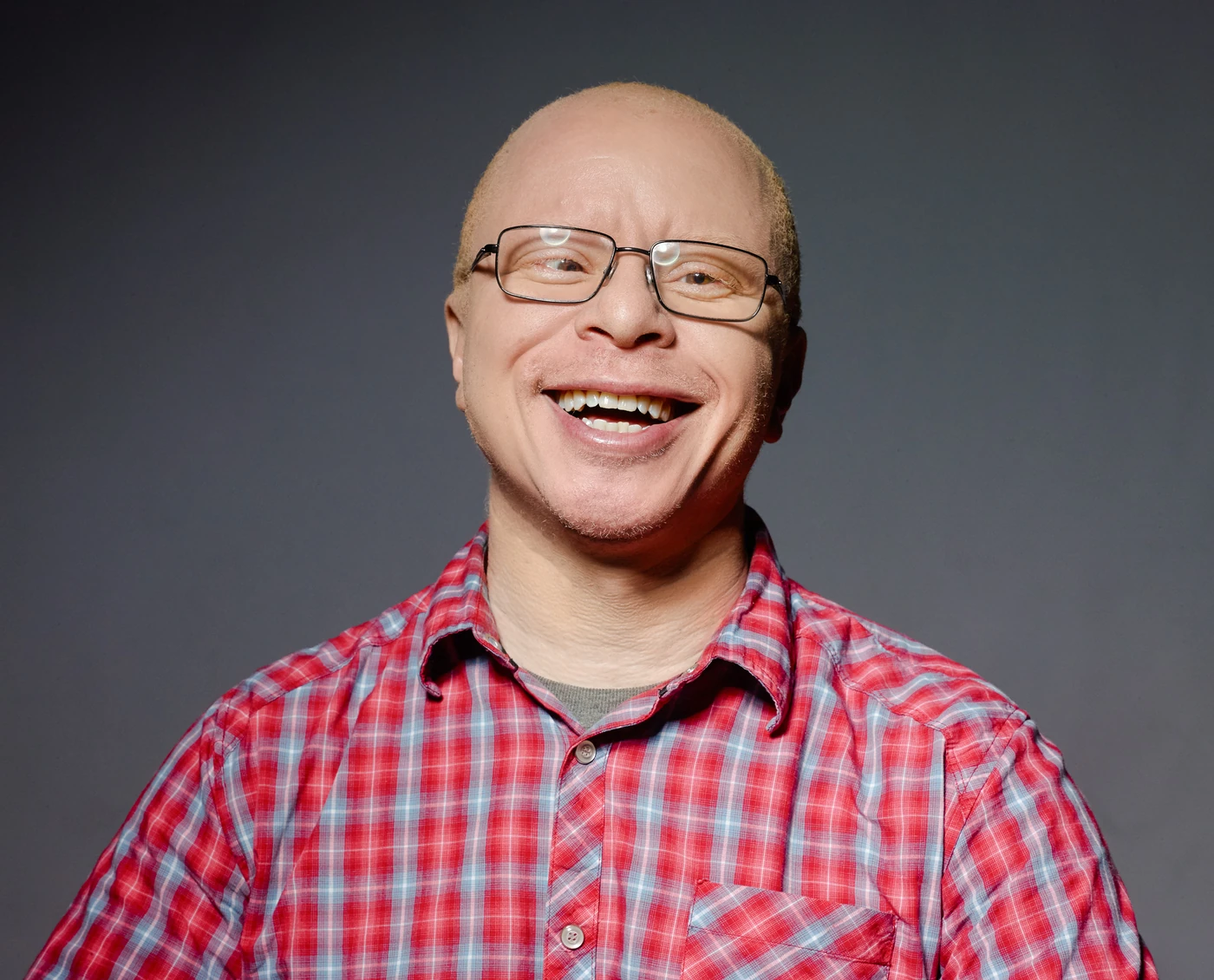
“Creativity is like other industries: The middle is getting squeezed. The exceptional will thrive.”
“If you can reason through information and communicate effectively, you will be fine in any future. Everything else is downstream of those two skills. The world is going to throw enormous amounts of information at people. The question is whether you can process it, synthesize it, and act on it — or whether it overwhelms you.”
Victor Varnado, comedian, New Yorker cartoonist, filmmaker, NSF grant recipient, and founder of Magic Bookifier, an AI writing platform with 17,000 users, shared his thoughts on art, creativity and human edge in the age of AI in my "Leading Through Disruption" series.
On Identity & the Logic of Creativity
Lauterbach: You describe yourself as a comedian, cartoonist, filmmaker, and entrepreneur. When someone asks what you do — what is your honest answer?
Varnado: I'm an amalgam of everything I was as a child. Before I was a comedian or a cartoonist, I was the kid who walked to the mall to use the computers at Radio Shack and learn basic programming. That's still who I am.
Lauterbach: You've described yourself as feeling like a robot trying to understand humans. What does that mean in practice?
Varnado: People receive logic and immediately do the opposite — that's what baffles me. I had a friend going through a painful separation, calling me every day in distress. I said: two questions. First — can you be happy? Yes or no? She said yes.
Second — does it require something specific to happen first?
She said yes, she needed clarity.
So I asked: assuming that clarity never comes, will you never be happy? She said no. I said: well, might as well start now.
People spend years suffering for lack of that one reframe.
“At the core of every creative act is just one thing: people want to be heard. Everything else is variation on that theme.”
Lauterbach: What drives humans to create — to write, to perform, to build stories?
Varnado: People want to communicate. They want to be understood. That's the core of the core. You put something down — a cartoon, a film, a joke — so that someone else receives an idea or a feeling you couldn't otherwise hand them. Art is just another language. Every form of it is an attempt to touch something in another person.
On AI & the Creative Industries
Lauterbach: When you first encountered modern generative AI, what was your reaction?
Varnado: I was amazed — but not surprised. In the 1980s, when I was obsessed with computers, the dream was always that a machine could talk back to you. Tron was the vision: you go into the computer, and everything communicates like people. When GPT-3 arrived, I thought: this is it, how far can we push it? I had already been using GPT-2 for months. Most people were building the wrong products. I built something useful to me.
Lauterbach: How do you think about AI's role in creativity?
Varnado: It's a tool. No different than a paintbrush or a hammer. Not everyone can sculpt with a hammer — but an artist can.
“We were in a creative gold rush and didn't know it. The middle is getting squeezed. The exceptional will thrive.”
Lauterbach: Creatives fear AI will take their jobs. Is that fear rational?
Varnado: Partially. The unfortunate truth is we were in a creative gold rush and didn't realise it. If you're producing commodity content — logos for small businesses, standard video edits — that market has changed. You cannot ask someone to pay $500 for a logo when they can generate one for a penny. But if you have 10,000 hours in your craft and genuinely original ideas, AI amplifies you. My output has increased dramatically. Things I did slowly, I now do fast.
Creativity is like other industries: The middle is getting squeezed. The exceptional will thrive.
Lauterbach: What is the difference between cognitive offload and cognitive discourse — and why does it matter for leaders?
Varnado: Let’s summon an imaginary Einstein. Cognitive discourse is when you sit with Einstein and work through a problem together. You grow through the conversation. Cognitive offload is when you hand Einstein your pile of homework and walk away. You learn nothing. Ninety percent of people use AI the second way — they get an answer and stop thinking. The ones who get extraordinary results use AI as a thinking partner, not a shortcut.
On Building Products & Leading with Simplicity
Lauterbach: You built Magic Bookifier with 17,000 users. What was the founding insight?
Varnado: I had a podcast with popular episodes and wanted to turn them into an eBook. The long form writer takes up to 50,000 words of your own content, applies your outline, and produces a first draft built entirely from your material — your ideas, rearranged and structured. The writing coach works differently: you say "I want to write a book about this," it asks you pre-interview questions, you answer them, and by the end you have a full first draft. That's exactly how I wrote my own book. AI does not write for me. It assists me. A first draft used to take weeks. Now it takes an afternoon.
Lauterbach: What design principle governs everything you build?
Varnado: Eliminate obstacles. Because of my neurodivergence, I hate friction. If I want to sit down and do something, I don't want prep work in the way. Everything I build should be simple to understand, simple to start, simple to enjoy. Leonardo da Vinci said simplicity is the most sophisticated thing. I've been living it. The products that win are the ones where the user doesn't notice the design at all.
“Every organisation needs someone internally who genuinely understands AI. Not a vendor. Not a McKinsey slide deck. Someone who is on their side.”
Lauterbach: What is the biggest organisational failure you see in companies adopting AI?
Varnado: They don't have anyone on their side who actually understands it. So they get preyed upon — by vendors who don't know what they're building, by consultants who use AI to sound knowledgeable about AI.
I heard of a social media manager who was red-flagged by a CNN contractor using AI. The system read “shooting the breeze with friends” and ‘understood’ it as a gun threat. The vendor of CNN didn't understand what kind of AI the company actually required. The buyer – CNN - didn't understand how to use AI properly. Both just trusted the output of a machine. That's dangerous — and it's everywhere.
On Comedy, Humour & What AI Cannot Do
Lauterbach: You work a lot in comedy. Can AI understand humour?
Varnado: It doesn't understand humour — because it isn't alive. But you can program it to write funny things. I have a daily newsletter where AI writes parts of it. The key is that communicating with AI to be funny is an art. AI responds powerfully to sharp emotional text. If you tell it something in a very specific way — the right tone, the right register — it responds well, because its training is built on predicting how people would react. A skilled writer who understands this is extremely powerful right now.
Lauterbach: What does that tell us about AI's actual limits?
Varnado: AI gets better and better at speaking without knowing what it's saying. A comedian's job is to find the gap between what's said and what's felt — the dislocation that produces the laugh. That requires lived experience, context, timing. AI can imitate the surface of a joke. It cannot feel the room. And I think that distinction — between performing intelligence and possessing it — is the most important thing most people are still not grasping.
“AI gets better and better at speaking without knowing what it's saying. And the most dangerous people in the room are the ones who are doing the same.”
On Education, Disruption & What Comes Next
Lauterbach: Your writing tool found an unexpected user base: neurodivergent writers. What did that teach you about building for disruption?
Varnado: That your most important users may not be the ones you imagined. A community of neurodivergent entrepreneurs found the writing coach because it helped them focus their thoughts and stay on task. Word spread. Now I'm partnering with a USC professor and applying for an NSF grant to put an educational version into schools. I didn't design for that market. They found me because the tool solved a real problem. The lesson: build something genuinely useful, and the right people will find it.
Lauterbach: What do humans fundamentally need to learn — regardless of what AI can do?
Varnado: Reasoning and communication. Full stop. If you can reason through information and communicate effectively, you will be fine in any future. Everything else is downstream of those two skills. The world is going to throw enormous amounts of information at people. The question is whether you can process it, synthesise it, and act on it — or whether it overwhelms you.
Lauterbach: If you had a magic wand to change one thing about how society approaches AI — what would it be?
Varnado: Something that makes people use it at scale without making anyone suffer in the process.
Think of what COVID did for Zoom — overnight, even grandma figured it out.
AI's adoption curve is slower, but a version of that moment is already happening in manufacturing with retiring experts, no apprentices to step in and demographic shifts forcing companies to adjust. Businesses that automate early will win. The ones that wait will not survive. It's economic Darwinism, and it's already underway.