
AI Leadership Interviews · Education and human intelligence
The Courage to Be Wrong
Dr. Vivienne MingTheoretical neuroscientist, entrepreneur and author
…If you are a risk-averse manager just taking answers out of a super-intelligent machine, keep in mind that all of those same answers are in the hands of all of your competitors. If you’re not differentiating on something other than AI, you will eventually disappear. It’s just that simple.”
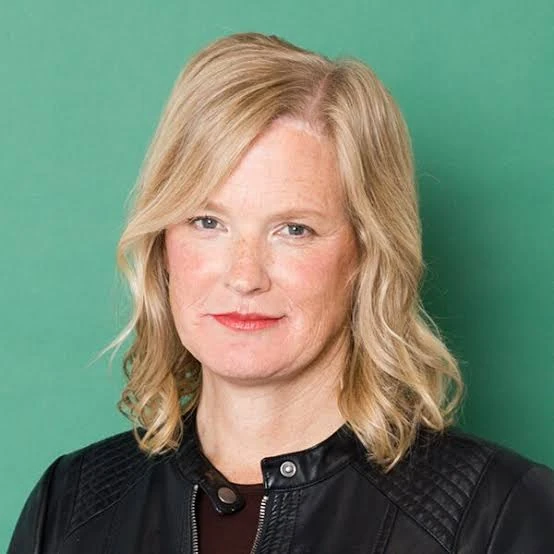
Dr. Vivienne Ming, theoretical neuroscientist, serial entrepreneur, inventor, and author of Robot-Proof: When Machines Have All the Answers, Build Better People, shared her thoughts on hybrid intelligence, the cognitive cost of automation, raising robot-proof children, and why exploration is the unique human value-add on my AI Snacks podcast, which led to this interview.
Lauterbach: Could you briefly talk about your path, and emphasize two or three pivotal moments that brought you to where you are today?
Ming: I call myself a professional mad scientist, simply because I don’t know what else to call myself. I started my career at UC Berkeley, studying cognitive science as an undergraduate and then psychology and computational neuroscience as a graduate student, and briefly had a joint appointment at Stanford and Berkeley. I still very much see myself as a scientist: I am interested in the questions we don’t understand yet.
The first pivot came when my wife, then a professor of education at UC Berkeley, and I had an idea for a project together. We asked ourselves whether it was an academic experiment or something more. We decided it was something more, and I opened my first business, building AI for education. I loved the speed of life as an entrepreneur, but hated pitching to investors on Sand Hill Road.
The second pivot followed from exactly that: why should I wait for someone else to decide what deserves to exist? If I believe in something enough, why do I care whether it makes me money now? So I started a nonprofit, funded the work myself, and when something new and valuable surfaced, we gave it away. It was the best job in the world and the worst startup idea ever.
The third pivot was the most personal. As a young person, I was supposed to be a doctor, win a Nobel Prize, be a genius. When those things didn’t come with effortless grace, I thought I was a failure. I gave up, and I spent a good part of the 1990s homeless. Having a second chance at life taught me that life is not about whether I was happy. It was about whether I was making other people’s lives better. That is how I make decisions now.
Lauterbach: In your book Robot-Proof: When Machines Have All the Answers, Build Better Peope, you ask a question I love: if you had one million dollars, what would you do with it? My answer would be an AI Literacy Program for teachers, helping them understand what AI is and how it works, and use data to enhance what they are working on. What is yours?
Ming: I don’t have to guess, because every year I put what I have left over into philanthropic research. In 2019, I built an education platform that listened to parents talk about their children and every night suggested the best way to spend fifteen free minutes with their child. In 2020, I used the money to keep all of my employees on board through the pandemic. Since then, I have worked on postpartum and perimenopausal depression. If you have ever been told "it’s all in your head," our research shows we can see it in a blood sample. So my answer is always the same. If I can “build” better people, that is what I would do with a million dollars.
Lauterbach: There is an enormous amount of noise around AI and very little essence. You come to it from neuroscience, which to my mind is one of the best backgrounds one can have. What is your honest assessment of where AI really is?
Ming: Far too few researchers, builders, and salespeople in AI have a background in how minds work. Many headline papers are written by computer scientists who aren't scientists in the traditional sense, or by business school professors who don’t always know how to run and validate an experiment. So big claims come out that are very hard to justify.
The clearest example is “AI reasoning.” Let me borrow two classic terms from psychology: model-free and model-based cognition. Model-free cognition is statistical learning: patterns, one word following another, the things we do without really thinking. Most of what humans do is model-free, which is why talking to a large language model feels so much like talking to a person. The overlap is enormous, and the machine’s model-free ability is superhuman. No human has read a fraction of what these models have consumed.
But we also have model-based systems that explain the world. That is what makes world models so interesting, and it is what is currently missing. Is AI intelligent? One hundred percent. Is it intelligent the way we are? Absolutely not. That difference has created a great deal of legitimate confusion, and plenty of room for snake-oil salesmen promising that tomorrow it will solve every problem and we can stop thinking.
Lauterbach: For thousands of years, people have developed ways to decide whom to trust: another person, an institution. We have no biological wiring for something that mimics human communication so convincingly. How should we think about trust and expectations in the age of AI?
Ming: Three studies tell the story. At an innovation day at Procter & Gamble, a single person working with AI produced ideas as good as a whole team. But the real signal was elsewhere: teams of an engineer and a marketer working with AI were three times as likely to produce one of the top three products later on. Collective human intelligence plus AI, a hybrid intelligence, produced something truly remarkable.
Then there is the Harvard and BCG study of consultants. On well-posed questions, where we know how to get the answer, consultants with AI were superhuman. On ill-posed questions, such as what the client should actually do, consultants without AI did better on average. Yet experts still rated the AI-assisted answers higher.
In a third experiment, people wrote arguments with or without AI. The AI-supported arguments were cleaner and better written, and judges rated them higher. But the rougher human arguments changed more minds.
Being better at writing does not truly improve us, as we need to ask what “better” means. Part of our perception of “better” is an illusion created by cleaner punctuation and bold typography. That becomes deeply problematic when AI is optimized to convince us, including of things that are not true.
Lauterbach: I often compare AI to the sugar in highly processed food: it makes us dependent without our noticing. Has AI ever discovered something truly new? And what does long-term reliance do to our cognition?
Ming: Modern AI is genuinely superhuman at discovery in two areas. The first is reinforcement learning; the Nobel Prize for AlphaFold is a good example. Game-playing agents accumulated the equivalent of 187 years of human play in a single night, and because they did not care whether they won or lost, they explored places humans never would and often found actual bugs in the game. AI knows everything but understands nothing, so it does not mind breaking physics. It just discovers.
The second is drug retargeting and interaction discovery. Many of these interactions are already in the literature. No human has read every pharmacological paper and connected the dots; a model can.
On cognition, we ran an experiment asking people to predict genuinely unpredictable things, such as the price of oil in six months. Smart UC Berkeley students with no special expertise did poorly on their own. A state-of-the-art model essentially reported what historical data said. It wasn't bad, but it wasn't as good as Polymarket, where experts were betting real money.
Then we paired humans and machines, and the story split in two. Most participants either asked the AI for an answer and submitted it, or gave the AI their answer and asked it to explain why they were right. We called them the “automators.” Their cognitive activity actually dropped compared to working alone. We measured gamma activity, one of the best markers of complex cognition, and saw a drop as big as the difference between working hard and watching TV. The research on navigation apps tells a similar story: people who over-rely on them show declines in memory and cognition.
The other group, whom I call the “cyborgs,” behaved differently. You could not tell who made the decision, because their choices differed from what either the human or the AI would have made alone. Their predictions were better than the best humans, better than the best AI, and as good as Polymarket. A group of smart students with no expertise made ten predictions in an hour and matched experts with millions of dollars at stake.
The performance of "cyborgs" wasn't tied to an AI model. Those using a small open-source model did almost as well as those using the most advanced one. The real sign of success was fluid intelligence, curiosity (if the AI gave you a good enough answer, did you keep looking?), intellectual humility, and perspective-taking. Your ability to understand other people “forecasted” your success with AI.
I am neither an AI utopian nor a dystopian. I am an AI realist. When these systems fail, it is usually because we humans did not understand the problem. And if we don’t understand it, the machine doesn't either.
Lauterbach: My daughter is seventeen. She is critical of machines but uses them, and she keeps asking her teachers to educate students on how to use AI responsibly. What does responsible use mean beyond not cheating? And how do we make sure people become more capable, not less, instead of reducing them to serving the machines?
Ming: The wrong story is “AI is a vice”: use it sparingly, take breaks. That frames AI as a bad thing. What we need is to raise people who engage with AI like cyborgs, and that is not about memorizing facts. It is experiential and deeply developmental.
You cannot give someone a lecture on curiosity. A course in curiosity rewards interesting questions, not right answers. Think of reinforcement learning in the human brain: does this person get a dopamine reward for discovering they don’t understand something? My son has Type 1 diabetes, and the diabetes world has an important lesson: there are no bad numbers. If his blood sugar is high, the worst thing I can say is, “What did you do wrong?” because then he starts hiding it. If I say, “I’m so glad we checked, because now we can do something about it,” knowledge becomes something positive.
Intellectual humility means not worrying about being wrong. My wife and I analyzed 60,000 university and MBA students. One of the biggest differences between the very best students and the next group was that the best students were regularly and intentionally wrong. They exposed their misunderstandings. AI can help here, because it can tell you that you are wrong without the social pressure of looking foolish in front of other people. AI is a wonderful tool for calibration when you ask: “Here is what I believe; tell me why I am wrong.”
This is what schools should be about today. You can still factor a polynomial and read literature, but alongside them we should build curiosity, fluid intelligence, and resilience. These qualities predict longevity, lifetime earnings, and happiness. We don’t teach them because they are hard to measure, and because management is about reducing uncertainty rather than exploring it. In a world where a small device in your pocket has all the right answers, exploration is the unique human value-add.
Lauterbach: Leadership, like AI, is one of the most misused and inflated words of our time. Leadership is ultimately about making decisions and bringing others along on a journey where the journey is treasured, not just the result. Yet in many organizations, I see slides rather than substance, and a strong urge to control rather than try something that might fail. Why?
Ming: Management is profoundly risk-averse, and that doesn’t change when you call it “venture capital.” Its job is to find the least risky bets in a portfolio, which is why everyone piles into late rounds of companies that look like a sure thing.
An American sitcom called Better Off Ted was set in a cartoonishly evil corporation. In one episode, a junior executive pitches a brilliant idea and says it is “almost certain” to be a huge success. Everyone freezes: “Almost?” The project is dead in thirty seconds. I have watched that scene many times, because it reflects the day-to-day of those VCs and startups.
I love the spirit of the San Francisco Bay Area, but once it became the domain of elite MBAs, it changed. People said they came to change the world, but the underlying instinct was to become a billionaire. Too many so-called business leaders treat problems as interchangeable. Only making money with them is the only criterion of “valuable.” One project I am most proud of was a facial analysis system that reunited orphaned refugees with their extended families – a real problem to solve. Orphan refugees are terrible customers, so the founder can't monetize their experience.
Here is the strategic point. If all the right answers are free in everyone’s pocket, you can differentiate on only a few things. You can try to build a proprietary data moat, and I virtually guarantee you will not win that fight. Or you can invest in human capital, not for the right answers, but for exploration. The overwhelming output of exploration brings wrong answers. Still, when wrong answers are driven by curiosity, intellectual humility, fluid intelligence, resilience, and perspective-taking, and amplified by AI, something emerges that is better than either humans or AI alone.
Are startups or large companies better at this? Neither. Startups are nimble and risk-loving, but, as someone who has built thirteen of them, I can tell you they are also full of people entering markets they don’t understand. Mature companies have genuine expertise; they just deploy it differently. The divide is a cultural question: will you build a culture that leans into uncertainty, because that is where the unique value is?
Lauterbach: Last question. How do you learn?
Ming: I read more research today than I did as a full-time academic, because now I read everything. When I hit something I can’t follow, I go deep. Recently I worked through quantum information versus classical information theory with an AI model, treating it like a graduate student. I told it: I am an expert in information theory; don’t waste my time with metaphors; walk me through the math from what I already understand. For the first time, I feel I really understood what quantum computing was about.
The other thing is about the old “learning by doing,” with a good spice of improvisation. I advise all my students to go on stages and discuss things they have never talked about before. I stopped preparing talks two decades ago.
Finally, there is an old saying that you don’t understand a topic until you have taught it six times. Teaching forces perspective-taking. It makes you confront your own misconceptions - not necessarily to agree with the other person, but to see yourself through their eyes. This creates a unique learning experience.